
August 19, 2026
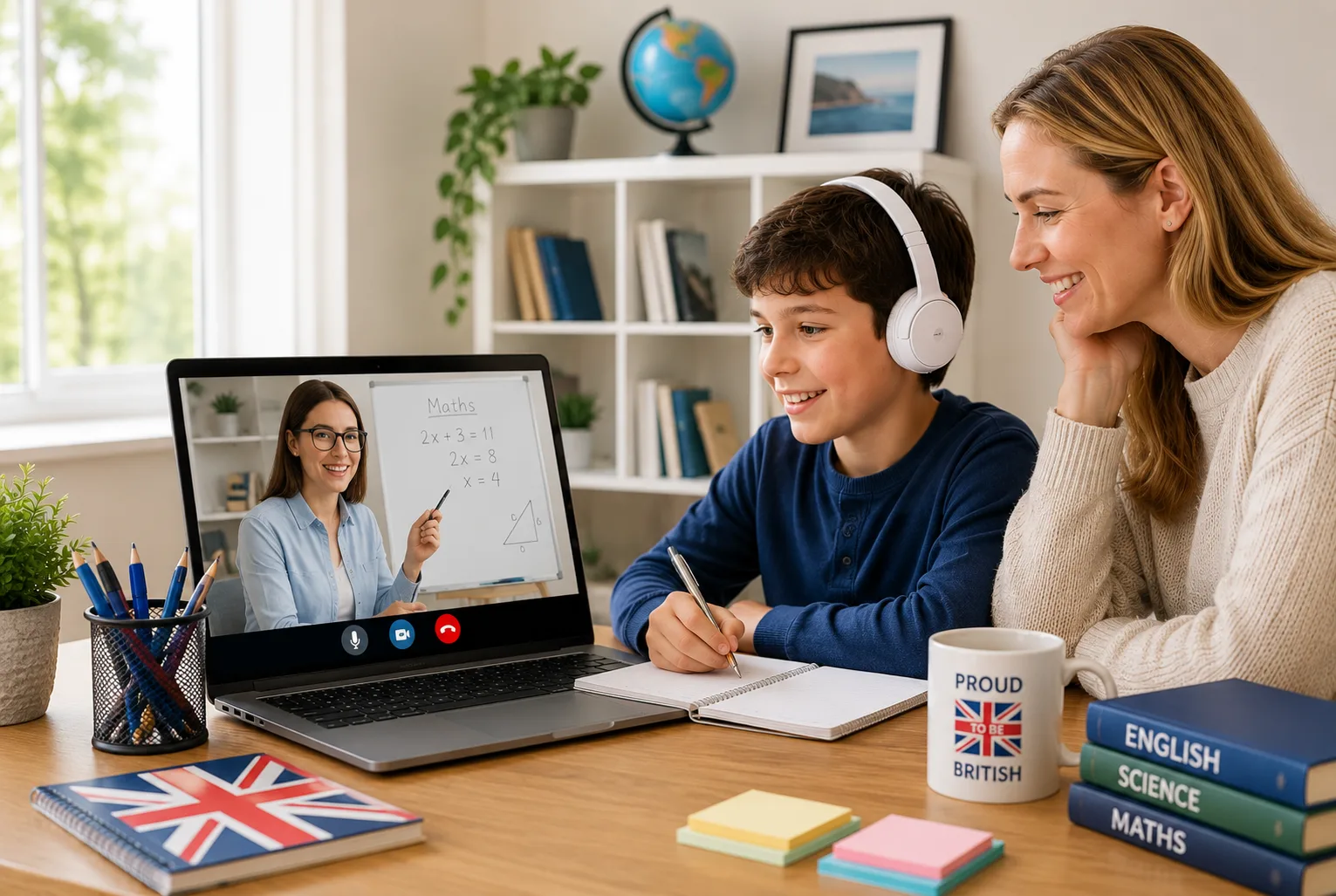
Online tutoring is personalised teaching delivered over the internet through live video lessons and digital learning tools. It allows students to learn from a tutor from home without travelling to a tuition centre.
For UK parents, online tutoring UK services can provide flexible support for children studying primary subjects, GCSEs, A-levels and other qualifications.
But how does online tutoring work, what are its benefits, and how can you choose the right tutor? This guide explains everything parents need to know.
Online tutoring is a form of education where a tutor teaches a student remotely using an internet-connected device.
Instead of meeting in person, the tutor and student communicate through a live video platform. They can talk, share screens, use a digital whiteboard, complete exercises, and discuss questions in real time.
Online tutoring can include:
The main advantage is that lessons can be personalised around the student’s learning needs and goals.
Online tutoring is usually simple to set up.
First, parents should decide what their child needs help with. This could be improving maths, understanding a difficult GCSE topic, preparing for exams, or building confidence in a subject.
Parents can then find a tutor with relevant subject knowledge, teaching experience and an understanding of the UK curriculum.
For GCSE or A-level students, it can be helpful to choose someone familiar with the relevant exam board and requirements.
The parent and tutor agree on a suitable date and time. One of the biggest benefits of online tuition UK is flexibility.
Students can attend lessons from home without spending time travelling to a tutor or tuition centre.
At the agreed time, the student joins the lesson using a computer or tablet.
The tutor may use video, audio, screen sharing, digital whiteboards, worksheets and interactive exercises to explain the topic.
A good online lesson should be interactive. Students should have opportunities to answer questions, solve problems, practise new skills, and ask questions.
The tutor can provide feedback and identify areas that need more practice. Regular progress checks can help parents understand how their child is developing.
Yes, online tutoring can be effective when lessons are personalised, interactive, and delivered by a suitable tutor.
It can be particularly helpful for students who:
However, online tutoring is not automatically effective simply because it takes place online. The quality of teaching, the tutor-student relationship and the student’s participation all matter.
Students can receive online tuition in many subjects, including:
For UK families, choosing a tutor who understands the relevant UK curriculum can help ensure lessons are appropriate for the student’s level.
Online tutoring can fit around school, homework, hobbies and family commitments. There is no need to travel to a tuition centre.
A tutor can focus on the student’s specific weaknesses, questions and learning pace. This can make lessons more targeted than general classroom teaching.
Online learning removes many geographical limitations. Parents can look for a tutor based on subject expertise and teaching style rather than simply choosing someone nearby.
Students can attend lessons from a familiar environment. This can be particularly convenient for busy families.
Online lessons can use digital worksheets, quizzes, presentations, shared documents and virtual whiteboards to make learning more interactive.
Yes, online tutoring can be useful for GCSE students who need additional subject support or exam preparation.
A tutor can help students understand difficult topics, practise exam-style questions, revise key concepts and improve their exam technique.
Parents should check that the tutor understands the student’s GCSE subject and, where relevant, their examination board.
Yes, but younger students may need more support to stay focused during online lessons.
Parents can help by providing a quiet study area, checking the technology before lessons, and reducing distractions.
A tutor who has experience teaching younger students can also make lessons more interactive and age-appropriate.
When choosing an online tutor, parents should consider:
Subject knowledge: Does the tutor understand the subject well?
Teaching experience: Have they worked with students of the appropriate age?
UK curriculum knowledge: Do they understand the relevant curriculum or qualification?
Communication: Can they explain difficult ideas clearly?
Personalisation: Will lessons be adapted to the student’s needs?
Feedback: Will they provide useful progress updates?
The right tutor should be a good educational fit for your child, not simply the cheapest available option.
Both online and face-to-face tutoring can be useful. The best choice depends on the student’s needs and learning preferences.
Online Tutoring | Face-to-Face Tuition |
Learn from home | Learn in person |
No travel required | Travel may be required |
Wider choice of tutors | Often location-based |
Uses digital tools | Uses physical resources |
Flexible for busy schedules | Direct in-person interaction |
Online tutoring is often a good option for families who value convenience and flexibility.
Online tutoring is live teaching delivered over the internet. A tutor teaches a student using video calls and digital learning tools.
Yes. It can help GCSE students understand difficult topics, practise exam questions, revise effectively and prepare for examinations.
Most lessons require a reliable internet connection and a computer or tablet with a working microphone and camera.
Look for relevant subject knowledge, teaching experience, UK curriculum knowledge and a teaching style that suits your child's learning needs.
Online tutoring offers UK families flexible, personalised learning support from home. If you are considering online tutoring in the UK, choose a tutor who understands your child’s needs and learning goals. Your Personal Tutor can help make online learning simple, focused and effective.





We provide practical education that prepares you with real-world skills for lasting success.
Quick Links
Your Personal Tutor© 2026 All Rights Reserved. Design by Vivid Digisolution