
October 22, 2026
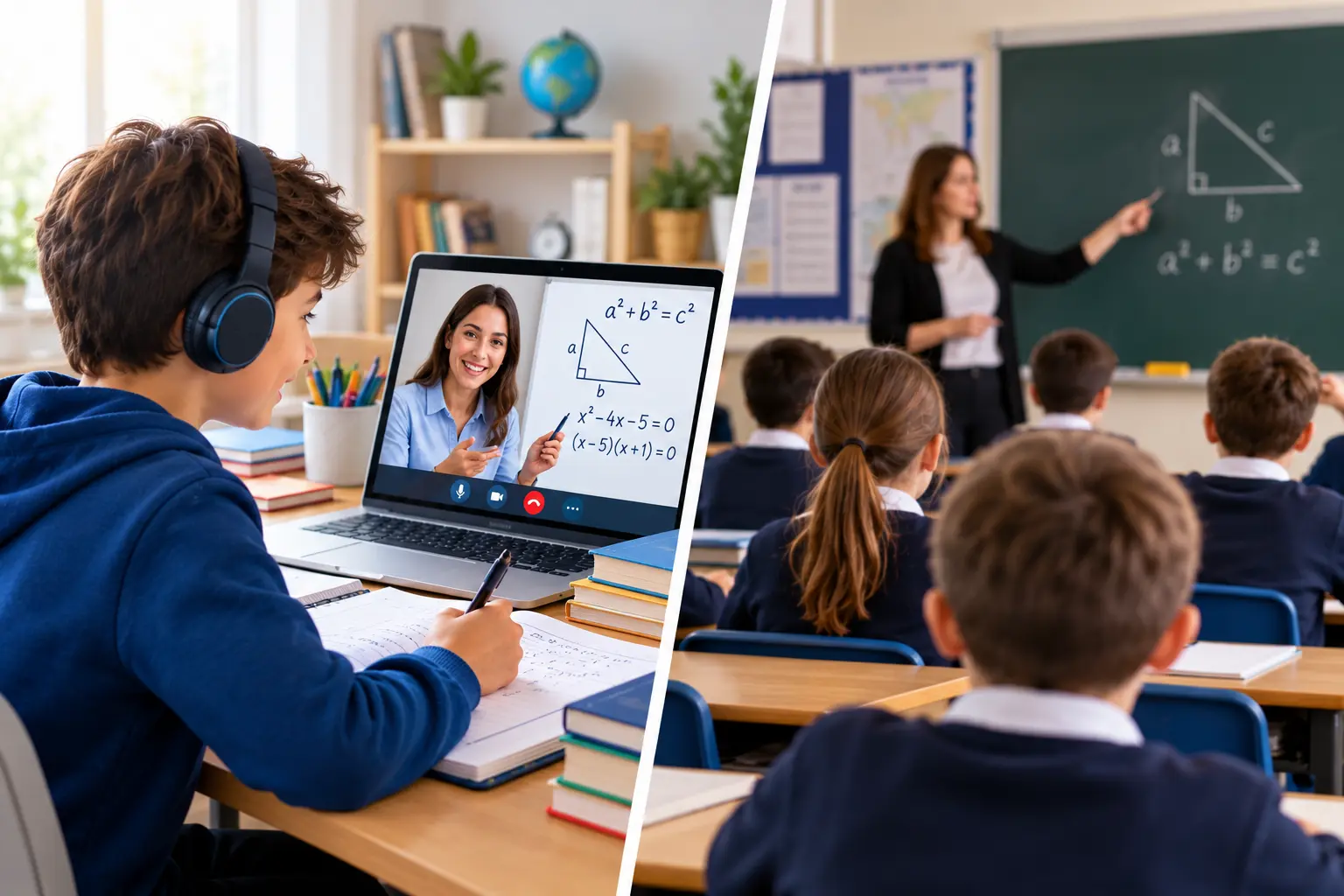
Online maths tutoring can be better than classroom learning for students who need flexible schedules, personalised attention and lessons tailored to their learning pace. Classroom teaching offers face-to-face interaction and a structured environment. The best option depends on a student’s learning style, confidence, academic goals and need for individual support.
Online maths tutoring involves learning mathematics through live virtual lessons using video calls, digital whiteboards and online learning resources. Students can work with a tutor from home without travelling to a tuition centre.
An online maths tutor UK students choose may provide support with primary maths, secondary school topics, GCSE preparation and A-level mathematics. Lessons can focus on algebra, geometry, fractions, equations, problem-solving and examination techniques.
Unlike a traditional classroom, online tutoring can offer one-to-one sessions designed around a student’s individual strengths and weaknesses. This makes it useful for learners who need extra explanations or want to improve their examination performance.
Both learning methods have advantages, but they differ in how lessons are delivered and how students receive support.
Online tutoring often provides more individual attention, particularly when students choose one-to-one lessons. Tutors can identify difficulties, explain challenging concepts, and adjust the pace according to the learner’s needs.
In a classroom, teachers usually work with several students at once. Although they can provide individual assistance, the amount of time available for each learner may be limited.
Winner: Online tutoring for students who need focused, individual support.
Online maths lessons can often be arranged around school, extracurricular activities and family commitments. Students can learn from home and avoid spending time travelling to a tuition centre.
Classroom tuition generally requires students to attend at a fixed location and time. This may be suitable for learners who prefer a routine but less convenient for busy families.
Winner: Online tutoring for flexibility and convenience.
Classroom learning offers direct social interaction with teachers and other students. Group discussions, collaborative activities, and face-to-face explanations can help some learners stay engaged.
Online lessons provide interaction through video calls, shared screens and digital whiteboards. However, students need a reliable internet connection and a quiet space to concentrate.
Winner: Classroom learning for students who benefit from in-person social interaction.
The cost of tutoring depends on the tutor’s experience, lesson length, group size and teaching format. Online sessions may reduce travel expenses and give families access to a wider choice of tutors.
Classroom tuition may involve additional travel costs, while group sessions can sometimes be more affordable than individual lessons.
Students should compare lesson quality, tutor qualifications and available support rather than choosing an option based on price alone.
Winner: Online tutoring may offer greater convenience, but value depends on the individual service.
Online maths tutoring can be effective for GCSE students when lessons follow the relevant exam specification and focus on areas that need improvement.
GCSE Maths covers topics such as number, algebra, ratio, geometry, probability and statistics. Students may understand a concept during a lesson but struggle to apply it to unfamiliar examination questions.
A suitable tutor can help students by:
Students preparing for GCSEs should look for tutors familiar with their exam board, such as AQA, Pearson Edexcel or OCR. Regular practice, feedback and independent revision remain essential, regardless of the teaching format.
Choosing between online lessons and classroom tuition requires an understanding of the student’s needs.
Consider these factors before making a decision:
Families exploring tutoring websites for math should compare tutor profiles, subject expertise, lesson formats, reviews, and pricing. They should also check whether lessons are delivered by the platform itself or by independent tutors.
A short introductory session can help determine whether the teaching style suits the student.
Yes, online tutoring can support students who lack confidence in mathematics or find particular topics difficult. Individual sessions allow learners to ask questions without worrying about keeping up with an entire class.
Visual explanations, digital worksheets and step-by-step demonstrations can make abstract concepts easier to understand. Students can revisit examples and practise similar questions until they become more confident.
However, online learning is not automatically suitable for everyone. Students who become easily distracted by screens or need close supervision may benefit more from classroom teaching or a blended approach.
Your Personal Tutor helps students explore learning support suited to their educational needs and goals. When choosing a tutor, families should look for clear explanations, relevant subject knowledge, structured lessons and regular feedback.
For students preparing for GCSEs, working with a GCSE English tutor online can also support English language and literature revision alongside maths tuition. Separate subject-specific lessons allow students to focus on the skills and examination requirements of each subject.
The key is to choose a learning arrangement that encourages consistent practice, builds confidence and supports steady academic progress.
Online maths tutoring offers flexibility, personalised support and convenient access to experienced tutors, making it a strong option for many students in the UK. Classroom learning remains valuable for learners who thrive on face-to-face interaction and group activities.
For GCSE students, the most effective choice is one that matches their learning style, addresses knowledge gaps and encourages regular examination practice. With the right tutor and a consistent study routine, either approach can help students develop stronger maths skills and greater confidence.
Online maths tutoring can be equally effective for many students when lessons are well planned and tutors provide personalised explanations, regular practice and constructive feedback. Results depend on teaching quality, student engagement and consistency.
Yes. An online tutor can help GCSE students revise the syllabus, practise exam-style questions, identify weak areas and develop examination techniques. Choose someone familiar with the student's exam board.
Yes. Many tutoring websites offer support for different ages and ability levels. Check the tutor's experience, lesson structure, and suitability for the student's current knowledge before booking.
Most students need a computer or tablet, a stable internet connection, a microphone and a quiet study space. A digital whiteboard or stylus can be helpful, but requirements vary by tutor.
Choose online tutoring if flexibility and individual attention are priorities. Classroom tuition may suit students who prefer face-to-face interaction and a structured group environment. A trial lesson can help you decide.






We provide practical education that prepares you with real-world skills for lasting success.
Quick Links
Your Personal Tutor© 2026 All Rights Reserved. Design by Vivid Digisolution