
September 22, 2026
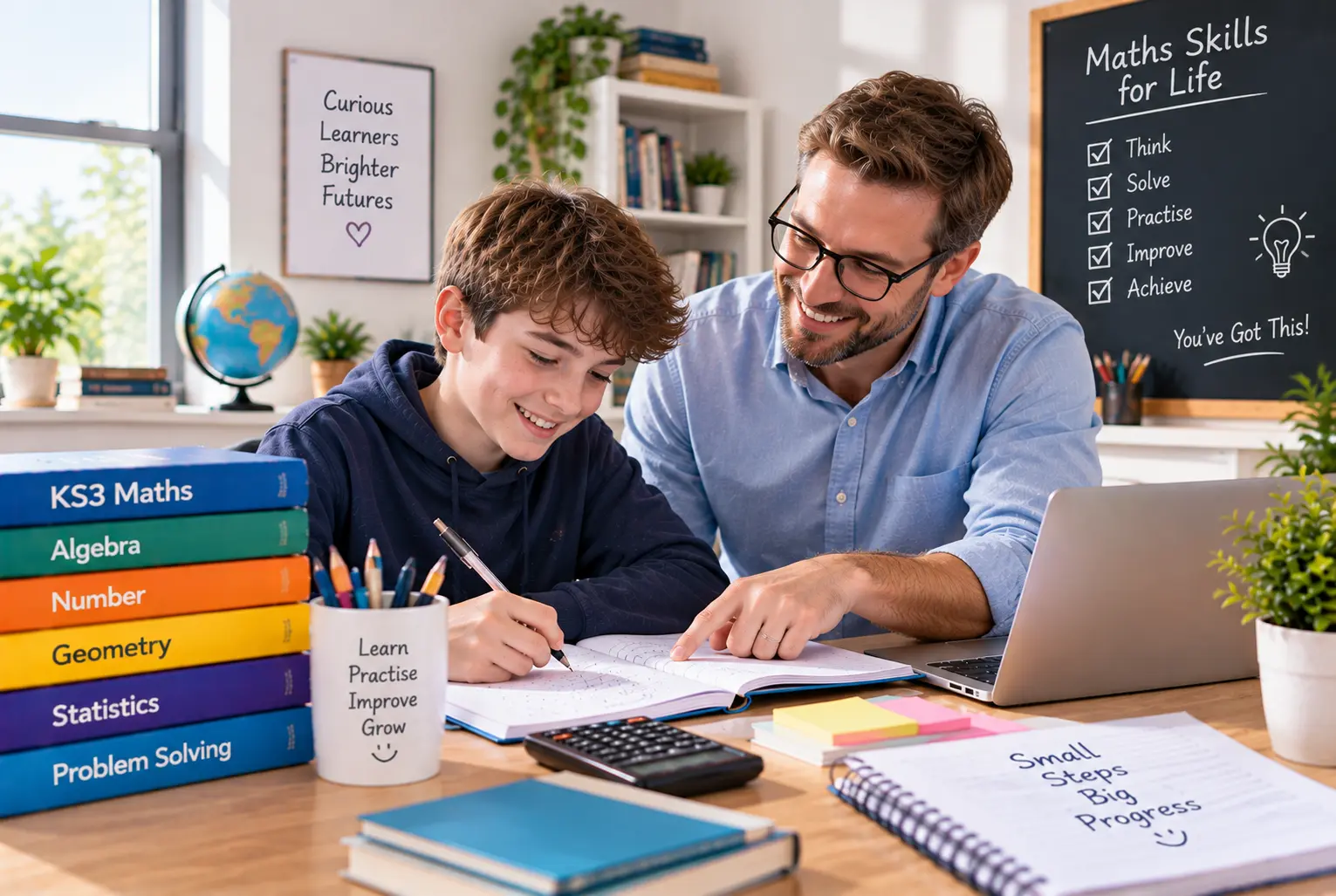
KS3 Maths is the mathematics taught to students in Years 7, 8 and 9 in England, usually covering ages 11–14. It builds the core skills students need for GCSE Maths, including number, algebra, geometry, statistics and problem-solving.
KS3 Maths is an important stage of secondary school mathematics in England. It comes after primary school and before GCSE Maths.
The aim is not simply to learn formulas. Students are expected to understand mathematical ideas, explain their reasoning, and apply what they know to different problems.
The topics become more challenging throughout Years 7, 8 and 9, so building a strong foundation during this stage can make GCSE Maths easier later.
The exact order and depth can differ between schools, but KS3 Maths commonly includes:
Students work with:
Algebra becomes a much bigger part of maths at this stage. Students may learn:
Students develop their understanding of shapes and measurements, including:
Students also learn how to collect, represent and interpret data. Topics can include averages, charts, graphs, probability and interpreting information.
By the end of KS3, students are generally expected to use mathematical knowledge independently and solve increasingly complex problems.
It is normal for students to find some topics difficult. Algebra, fractions, percentages and multi-step problems can take time to understand.
The important thing is to identify gaps early rather than allowing them to build up.
You do not need to be a maths expert to help your child.
Start by asking what they are currently learning and encourage them to explain the method they are using. This can help reveal whether they understand the idea or are simply memorising steps.
Short, regular practice is usually more manageable than long study sessions. You can also use everyday situations, such as shopping, cooking, budgeting or travel, to make maths more practical.
Most importantly, avoid making mistakes feel like failures. Encourage your child to check their working and understand where they went wrong.
If your child regularly struggles with homework, loses confidence, avoids maths, or has gaps in basic skills, additional support may help.
An online maths tutor KS3 can provide focused lessons based on the student’s current ability. Instead of moving at the same pace as a full classroom, tutoring can spend more time on topics that need extra practice.
When looking for the best online math tutor, consider their experience with KS3 students, teaching approach, lesson structure and ability to explain difficult ideas clearly.
Online tutoring can give students one-to-one attention from home. Lessons can focus on specific topics, homework support, exam preparation, or strengthening weak areas.
A good tutor should do more than provide answers. They should encourage students to explain their thinking, work through problems, and gradually become more independent.
KS3 Maths provides the foundation for future mathematical learning and GCSE preparation. With regular practice, encouragement and the right support, students can build both skills and confidence.
Parents can make a real difference by creating a positive attitude towards maths and getting extra help when needed. Your Personal Tutor can provide personalised online maths support to help KS3 students understand challenging topics, strengthen their skills and make steady progress.
KS3 Maths is generally taught to students aged 11 to 14 in Years 7, 8 and 9 in England.
KS3 Maths commonly covers numbers, fractions, percentages, ratios, algebra, geometry, statistics, probability, graphs and problem-solving.
KS3 Maths can become more challenging as students progress through Years 7–9. Topics such as algebra, fractions and multi-step problems may require additional practice.
Encourage regular practice, ask your child to explain their working and help them understand mistakes. Everyday activities such as shopping and budgeting can also make maths more practical.
Yes. An online maths tutor KS3 can provide personalised support, focus on difficult topics and help students build confidence at their own pace.
Look for a tutor with KS3 teaching experience, clear communication, a structured approach and lessons tailored to your child's individual learning needs.






We provide practical education that prepares you with real-world skills for lasting success.
Quick Links
Your Personal Tutor© 2026 All Rights Reserved. Design by Vivid Digisolution