
July 20, 2026
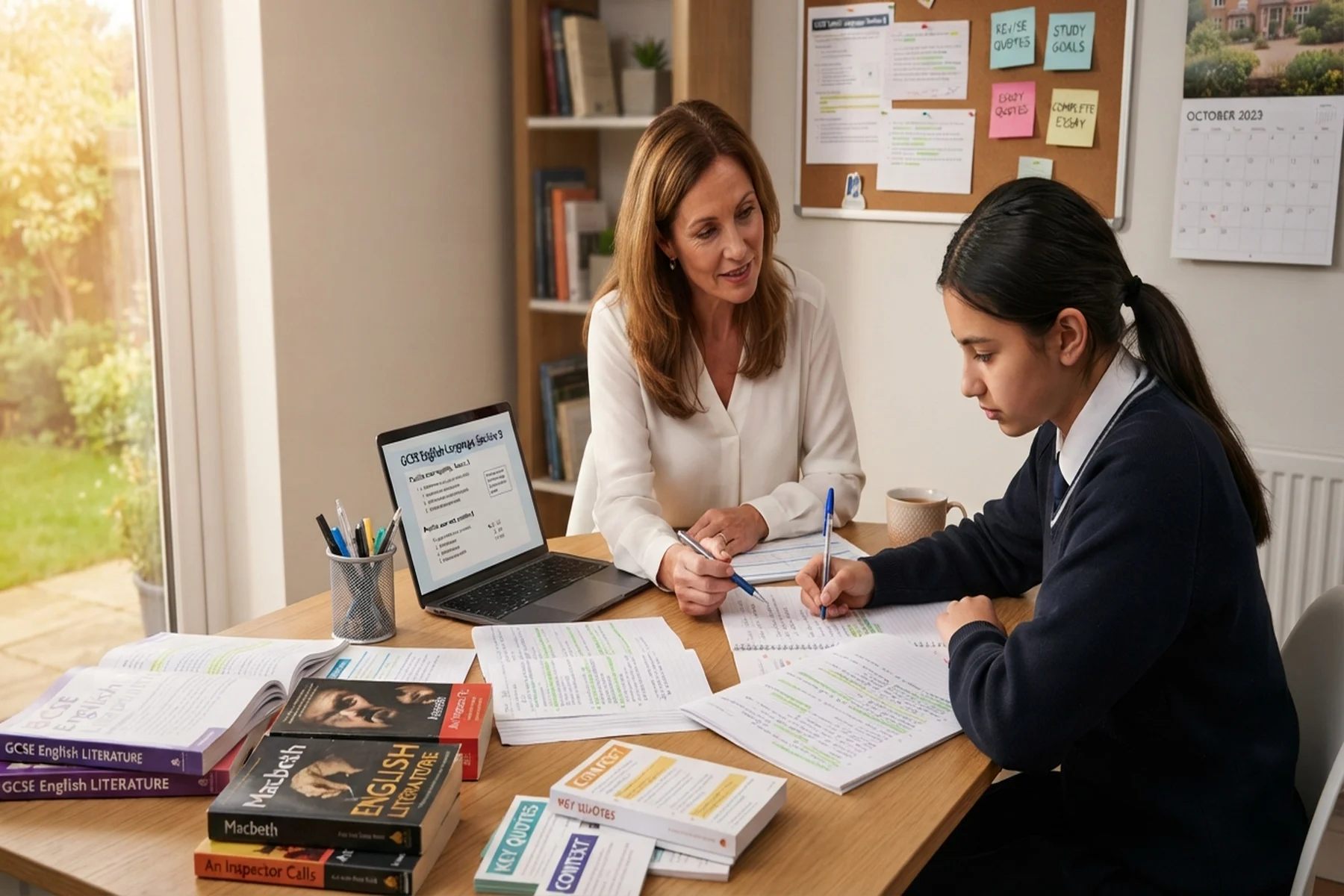
Preparing for GCSE English can feel overwhelming for many students. With reading analysis, creative writing, essay planning, and exam techniques to master, it is understandable why many learners feel anxious before their exams.
The good news is that success in GCSE English is not about memorising everything. It is about developing strong reading, writing, and analytical skills while using effective revision strategies. With the right approach, students can build confidence and achieve better grades.
GCSE English is one of the most important qualifications students will achieve during secondary school.
A strong GCSE English grade can:
English is also a foundation subject that supports learning across many other areas of education.
GCSE English usually consists of two main subjects:
Subject | Areas Covered |
GCSE English Language | Reading, creative writing, transactional writing, and language analysis |
GCSE English Literature | Poetry, Shakespeare, modern texts, and literary analysis |
Most students study exam specifications from AQA, Edexcel, or OCR.
Many students struggle because GCSE English requires a wide range of skills.
Common challenges include:
Confidence can also play a major role in exam performance.
The best GCSE English preparation starts early.
Students who revise consistently throughout Year 10 and Year 11 usually feel more confident and less stressed before examinations.
Stage | Focus |
Year 10 | Build understanding and identify weaknesses |
Early Year 11 | Begin structured revision |
Final Months | Practice papers and exam techniques |
Regular revision is usually more effective than last-minute studying.
Organisation is one of the most important parts of exam preparation.
Students should divide revision into manageable sections, including:
A revision timetable helps students remain consistent.
Reading is essential for success in both English Language and English Literature.
Students should regularly read:
This improves vocabulary, comprehension, and analytical thinking.
A strong vocabulary helps students:
Learning new words and using them in writing can significantly improve exam performance.
Many students lose marks because they misunderstand the question.
Students should practise:
Regular practice improves confidence and exam technique.
Creative writing often causes anxiety.
Students can improve by practising:
Reading books and articles can also improve writing style.
Students should become familiar with techniques such as:
Understanding how writers create meaning is essential for high marks.
Students do not need to memorise entire texts.
Instead, they should learn important quotations that support key themes and characters.
Creating quotation banks can make revision easier.
Students should focus on:
Understanding relationships between these areas often leads to stronger essays.
Essay writing improves through regular practice.
Students should learn how to:
A strong essay structure can significantly improve grades.
Practice papers are one of the best revision tools.
They help students:
Completing past papers also reduces exam anxiety.
Benefit | Outcome |
Familiarity | Better understanding of question styles |
Time Management | Faster and more organised answers |
Confidence | Reduced exam stress |
Feedback | Clear understanding of weaknesses |
Many students spend too much time revising literature and neglect the English language.
Both subjects require equal attention.
Memorising quotations without understanding themes and context often limits essay quality.
Students should focus on understanding rather than rote learning.
Knowledge alone is not enough.
Students also need strong exam technique, planning skills, and time management.
Parents can play an important role in helping students succeed.
Ways to provide support include:
Confidence and emotional support are just as important as academic preparation.
Many students know more than they think.
However, anxiety can reduce performance during examinations.
Building confidence helps students:
Positive reinforcement and consistent preparation often improve confidence significantly.
Online learning provides students with flexible and personalised support.
Benefits include:
Many families now choose online learning because it allows students to receive support from specialist tutors regardless of location.
Working with an online English tutor can help students improve both academic skills and confidence.
A tutor can provide support with:
Personalised support often allows students to make faster progress.
Students preparing for selective school examinations may also benefit from support from an 11 plus tutor online, as strong reading and comprehension skills are important for both GCSE and 11 Plus success.
Mind maps help students organise information and connect themes, characters, and quotations.
Explaining concepts to another person is a powerful revision strategy.
Teaching often highlights gaps in understanding.
High-quality examples help students understand examiner expectations.
Reading model responses can improve essay structure and analytical writing.
Short revision sessions are usually more effective than long periods of studying.
Consistency is key to long-term success.
Before the exam:
✅ Read questions carefully
✅ Highlight important words
✅ Plan answers briefly
✅ Manage time effectively
✅ Stay calm and confident
Remember that exam preparation is a gradual process, and every small step contributes to improvement.
Begin by identifying strengths and weaknesses, creating a revision timetable and practising questions regularly.
Most students benefit from several short revision sessions each week rather than long study periods.
Yes. Practice papers improve confidence, exam technique, and time management.
Regular writing practice, reading model answers, and receiving feedback can significantly improve essay quality.
Many students find GCSE English challenging because it requires reading, writing, and analytical skills, but effective preparation can make a significant difference.
Parents can provide encouragement, create positive study habits, and support confidence-building.
Yes. Personalised support often helps students improve understanding, confidence and exam performance.
Students should revise themes, characters, context, and important quotations.
Regular writing practice and reading widely can improve creativity and vocabulary.
Confidence helps students communicate ideas clearly and perform better under exam conditions.
GCSE English preparation does not need to be stressful. With consistent revision, effective study techniques, and the right support, students can improve their skills and approach exams with confidence.
Success comes from understanding texts, practising writing, and developing strong exam techniques over time.
Whether through independent revision or support from an online English tutor, every student can develop the skills needed to achieve their academic goals and build confidence for future success.






We provide practical education that prepares you with real-world skills for lasting success.
Quick Links
Your Personal Tutor© 2026 All Rights Reserved. Design by Vivid Digisolution