
September 23, 2026
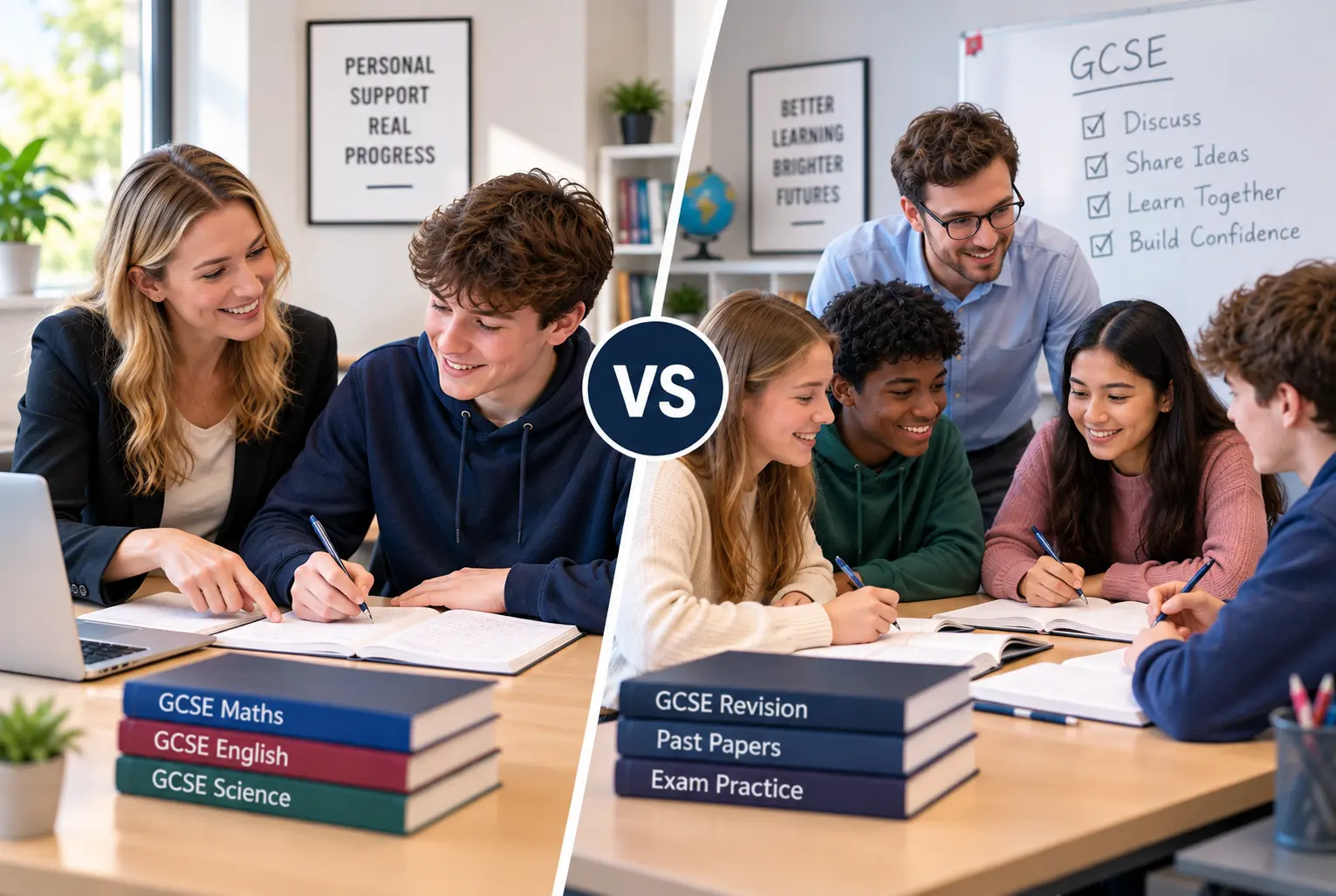
For many GCSE students, one-to-one tutoring can deliver better results because lessons are personalised to their needs, learning pace, and academic goals. Group tutoring can still be effective for students who enjoy collaborative learning and are comfortable following a shared lesson pace.
One-to-one tutoring means a student works directly with a tutor during each lesson. The tutor can adjust the lesson according to the student’s current knowledge, difficulties, and GCSE goals.
With one-to-one online tutoring, students can learn from home while receiving focused support. If a student finds a particular topic difficult, the tutor can spend more time explaining it and provide additional practice.
This can be especially useful for students who:
Group tutoring involves several students learning with the same tutor. Lessons usually follow a common plan, meaning everyone works through similar topics and activities.
This format can be useful for students who enjoy interacting with classmates. They can listen to different questions, discuss ideas, and learn from other students’ approaches.
However, the tutor’s attention is divided between the group. A student may receive less individual support when they are struggling with a specific topic.
The better option depends on what the student needs.
Factor | One-to-One Tutoring | Group Tutoring |
Individual attention | High | Shared |
Lesson pace | Personalised | Same for the group |
Weak areas | Targeted | General |
Student questions | More time available | Shared with group |
Learning style | Individual | Collaborative |
Flexibility | Usually higher | Usually structured |
Exam preparation | Highly focused | Group-focused |
For students who need targeted academic support, individual tutoring often has an advantage because the entire lesson can focus on their specific requirements.
Every GCSE student has different strengths and weaknesses. One student may understand the theory but struggle with exam questions, while another may need help understanding basic concepts.
A private tutor UK students can work with can identify these gaps and adapt lessons accordingly. This avoids spending too much time on topics the student already understands.
Personalised lessons can also give students more opportunities to ask questions, practise difficult concepts, and receive immediate feedback.
Yes. Online tutoring can be an effective way to support GCSE learning when lessons are well structured, and the tutor provides regular feedback and practice.
An online tutor in UK can teach students through video lessons, digital resources, practice questions, and interactive learning activities. Students can also avoid travel time and attend lessons from home.
The important factor is not simply whether tutoring is online or in person. The tutor’s subject knowledge, teaching approach, lesson structure, and ability to understand the student’s needs all matter.
Ask the following questions before choosing:
If the student needs personalised academic support, one-to-one online tutoring may be the better choice. If they are confident, social, and comfortable learning at a shared pace, group tutoring can be a suitable option.
Both one-to-one and group tutoring can help GCSE students make academic progress. However, one-to-one tutoring provides a more personalised learning experience, making it particularly useful for students who need focused support or want to work towards specific academic goals.
The right tutor, consistent practice, and a clear study plan can make a significant difference to GCSE preparation. Your Personal Tutor can help students find a learning approach that matches their individual needs and supports their journey towards better results.
One-to-one tutoring can be more effective for students who need personalised attention, targeted revision, or support with specific weaknesses.
Group tutoring can encourage discussion, collaboration, and shared learning. It may suit students who are comfortable learning with others.
Yes. One-to-one online tutoring can provide personalised lessons, flexible scheduling, and focused academic support from home.
The ideal frequency depends on the student's goals, current level, and available study time. Regular sessions combined with independent revision can provide consistent support.
A suitable private tutor UK students can work with should understand the relevant GCSE curriculum, have strong subject knowledge, and be able to adapt lessons to the student's needs.






We provide practical education that prepares you with real-world skills for lasting success.
Quick Links
Your Personal Tutor© 2026 All Rights Reserved. Design by Vivid Digisolution